
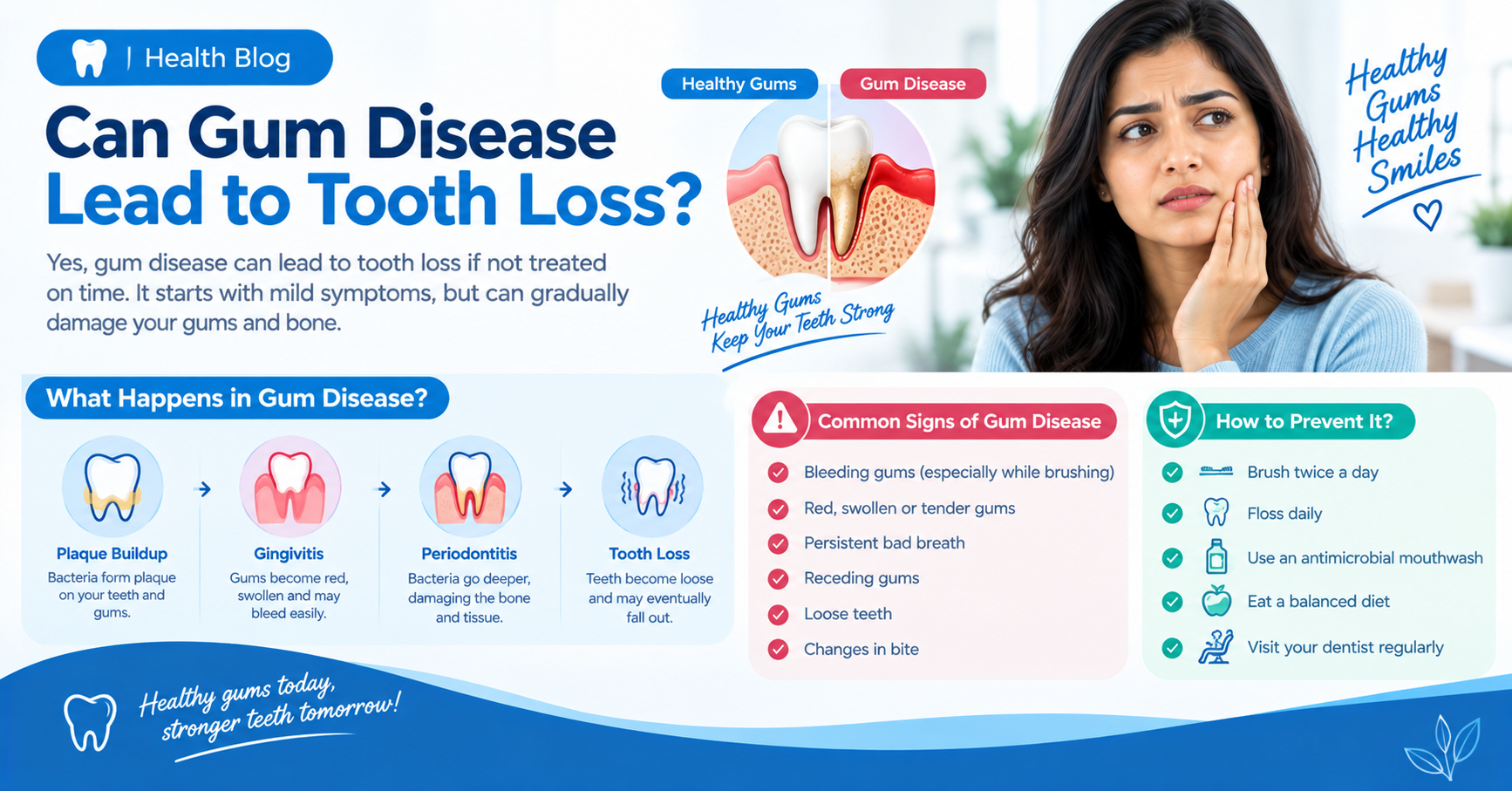
Healthy gums are essential for keeping your teeth strong and stable. However, when gum problems are ignored, they can gradually damage the tissues and bone that support your teeth. In advanced cases, gum disease can lead to loose teeth and eventually tooth loss.
Many people assume that bleeding gums or bad breath are minor problems. In reality, these symptoms can be early warning signs of gum disease and should not be ignored.
If you are experiencing gum problems, consulting a dentist early can help prevent further damage. For people looking for a dentist in Raja Park Jaipur, understanding the symptoms and causes of gum disease is an important first step toward protecting their oral health.
Gum disease is an infection or inflammation of the tissues surrounding and supporting your teeth. It commonly develops when plaque, a sticky film of bacteria, builds up along the gumline.
If plaque is not removed regularly, it can harden into tartar, which cannot be completely removed by ordinary brushing.
Gum disease generally progresses through two main stages:
Gingivitis is the early stage of gum disease. Common symptoms include red, swollen, or bleeding gums, particularly during brushing or flossing.
At this stage, the condition is usually reversible with proper oral hygiene and professional dental cleaning.
If gingivitis is left untreated, it may progress to periodontitis. This advanced condition damages the tissues and bone that support your teeth.
As the supporting structures weaken, teeth may become loose, chewing may become difficult, and tooth loss can occur.
Early diagnosis and appropriate gum disease treatment in Raja Park Jaipur can help control the condition and protect your natural teeth.
Gum disease does not usually cause teeth to fall out overnight. Instead, the damage develops gradually.
Step 1: Plaque Builds Up
Bacteria accumulate on teeth and around the gumline, causing inflammation.
Step 2: Gums Become Inflamed
The gums may become red, swollen, tender, or bleed during brushing.
Step 3: Supporting Tissues Become Damaged
If the condition progresses, the infection can damage the periodontal ligament and the bone supporting the teeth.
Step 4: Teeth Become Loose
As the supporting bone is lost, teeth may begin to move or feel unstable.
Step 5: Tooth Loss May Occur
In severe cases, a tooth may fall out or require extraction if it cannot be saved.
The good news is that early professional treatment can help control gum disease and reduce the risk of further damage.
Recognizing symptoms early can make a significant difference in treatment outcomes.
Look out for these common warning signs:
Bleeding gums while brushing or flossing
Red, swollen, or tender gums
Persistent bad breath
Gums pulling away from the teeth
Teeth appearing longer than before
Loose or shifting teeth
Pain or discomfort while chewing
Changes in the way your teeth fit together
Gum disease can sometimes progress with little pain. Therefore, do not wait until you experience severe discomfort before visiting a dentist.
If you notice these symptoms, consider scheduling an examination at a dental clinic in Raja Park Jaipur.
Several factors can increase your risk of developing gum disease.
Inadequate brushing and flossing allow plaque to accumulate around the teeth and gums.
Smoking and tobacco use increase the risk of gum disease and can interfere with healing.
People with poorly controlled diabetes have a higher risk of developing serious gum problems.
Without regular dental examinations, gum disease may remain undetected until significant damage has occurred.
Some individuals may be more susceptible to gum disease because of genetic factors.
Hormonal changes during pregnancy and other life stages can make gums more sensitive to plaque and inflammation.
The answer depends on the stage of the disease.
Gingivitis: Early gum inflammation can generally be reversed through proper brushing, daily cleaning between teeth, and professional dental cleaning.
Periodontitis: Damage to the supporting bone and tissues is generally not fully reversible on its own. However, appropriate periodontal treatment can help control the disease, reduce inflammation, and prevent further damage.
Treatment may include professional scaling and root planing, improved oral hygiene, and additional periodontal procedures when necessary.
A dentist will assess your gums, measure periodontal pockets, and determine the most appropriate treatment for your condition.
Treatment depends on the severity of the infection and the amount of damage to the supporting tissues.
For early gum problems, professional cleaning helps remove plaque and tartar deposits that contribute to inflammation.
This deep-cleaning procedure removes plaque and tartar from below the gumline and smooths the root surfaces to support gum healing.
Advanced cases may require specialist periodontal care or surgical treatment, depending on the condition of the gums and supporting bone.
After treatment, regular dental visits and consistent home care are essential to help control the disease and reduce the risk of recurrence.
If you need gum disease treatment in Raja Park Jaipur, a dental examination can help identify the stage of the condition and guide your treatment plan.
You can reduce your risk of gum disease by following a consistent oral care routine.
Brush twice daily with fluoride toothpaste.
Clean between your teeth every day using floss or an appropriate interdental cleaner.
Avoid smoking and tobacco products.
Limit frequent sugary snacks and drinks.
Manage diabetes with appropriate medical care.
Visit your dentist regularly for examinations and professional cleaning.
Seek advice promptly if your gums bleed or your teeth feel loose.
These habits can help protect your gums and preserve your natural teeth for longer.
You should arrange a dental appointment if you experience persistent bleeding gums, gum recession, swelling, ongoing bad breath, or discomfort while chewing.
Loose teeth require prompt dental assessment, as they may indicate significant damage to the supporting tissues or another dental problem.
If you are searching for a dentist near Raja Park Jaipur or a dental clinic serving nearby areas such as Adarsh Nagar, Tilak Nagar, and Jawahar Nagar, choose a dental professional who can evaluate your symptoms and recommend appropriate care.
At Kiran Smile Dental Clinic, patients can seek guidance for gum health concerns, preventive dental care, and other oral health problems. A proper examination helps identify the cause of gum symptoms and determine suitable treatment options.
Whether you are experiencing bleeding gums, persistent bad breath, gum recession, or loose teeth, seeking professional advice early can help you understand your condition and protect your oral health.
If you are looking for a dental clinic in Raja Park Jaipur, schedule a consultation to discuss your symptoms and receive personalized dental care.
Yes, gum disease can lead to tooth loss when it progresses and damages the tissues and bone supporting your teeth. However, early detection, appropriate treatment, and good daily oral hygiene can help control gum disease and reduce the risk of losing your natural teeth.
Do not ignore bleeding gums or assume that loose teeth are simply a normal part of aging. Taking action early can make a meaningful difference to your long-term oral health.
For concerns about gum disease or tooth mobility, consult Kiran Smile Dental Clinic in Raja Park, Jaipur, for professional evaluation and guidance.