
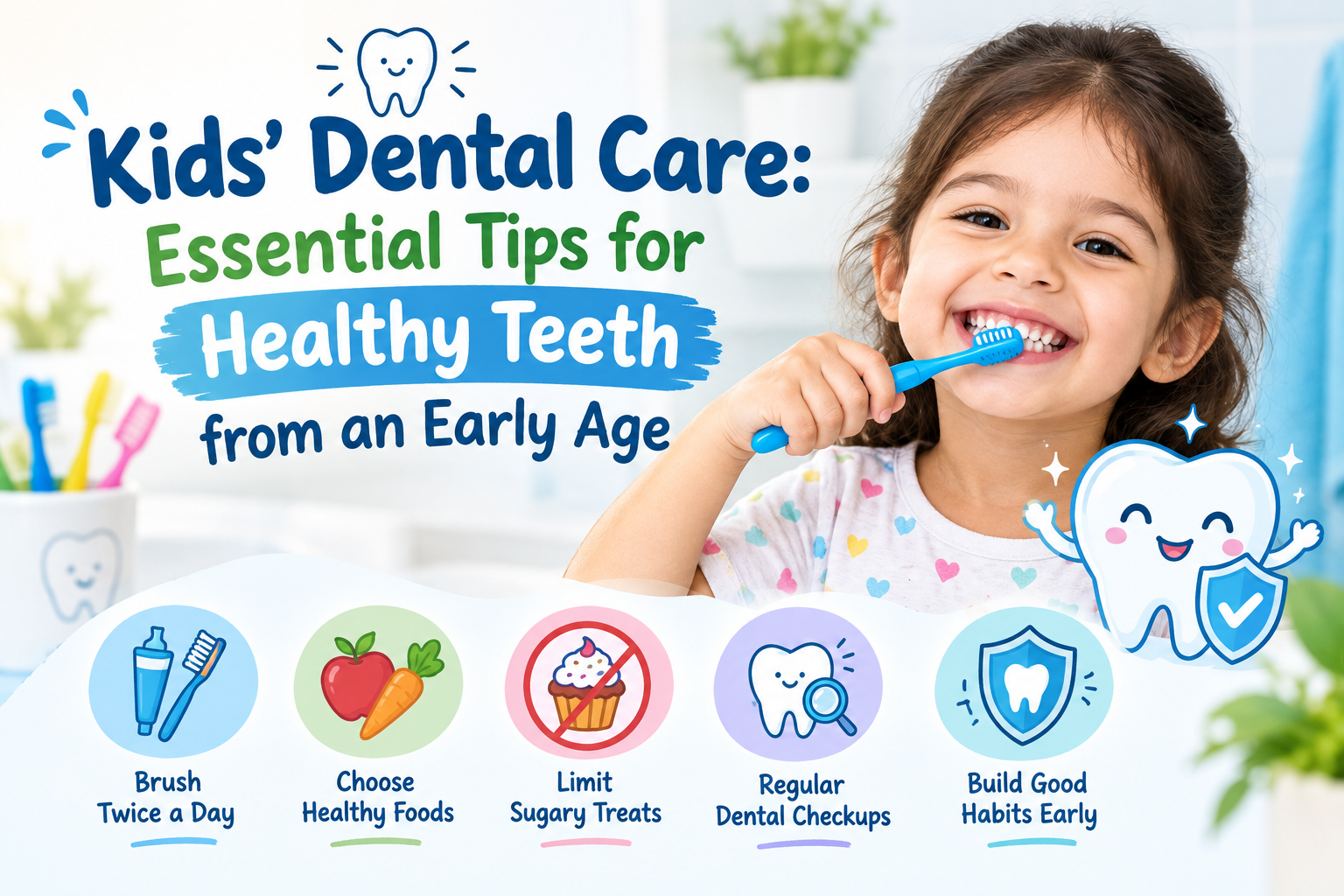
Children’s baby teeth may eventually fall out, but they still have important functions. Baby teeth help children chew food, speak clearly, and maintain space for permanent teeth.
Poor oral hygiene can allow plaque and bacteria to build up around the teeth, increasing the risk of cavities and gum problems.
Teaching children proper dental habits early can make oral care a natural part of their daily routine.
Dental care should begin as soon as the first tooth appears.
Parents can gently clean an infant’s teeth with an appropriate soft toothbrush. As children become older, they can gradually learn to brush independently, but younger children often need parental supervision and assistance to make sure all tooth surfaces are cleaned properly.
As children grow, encourage them to brush their teeth regularly as part of their morning and bedtime routine.
Children should develop the habit of brushing their teeth twice daily.
Use a soft-bristled toothbrush and an age-appropriate amount of fluoride toothpaste. Parents should supervise brushing in young children and help them reach areas they may miss.
Brushing should be gentle rather than aggressive.
Simply giving a child a toothbrush may not be enough.
Show your child how to gently brush:
Encourage children to brush for about two minutes and make brushing a fun and consistent routine.
Fluoride helps strengthen tooth enamel and protect teeth against cavities.
The appropriate amount of toothpaste depends on the child’s age. Parents should follow guidance from their dentist regarding fluoride toothpaste and supervise younger children to help prevent swallowing toothpaste.
Frequent exposure to sugary foods and drinks can increase the risk of tooth decay.
Try to limit:
Instead, encourage nutritious foods and water as a regular drink.
A balanced diet supports a child’s general health as well as their teeth.
Tooth-friendly snack options can include foods such as:
The focus should be on a balanced diet and reducing frequent sugary exposures.
Water is a simple choice for keeping children hydrated without exposing their teeth to added sugars.
Encourage children to drink water regularly, particularly between meals.
Frequent or prolonged exposure to sugary liquids can increase the risk of tooth decay.
Avoid putting a child to bed with a bottle containing sugary drinks. For young children, discuss appropriate feeding and oral hygiene practices with a pediatrician or dentist.
Brushing cannot always clean the spaces between teeth effectively.
Once children have teeth that touch each other, parents should discuss flossing or other suitable interdental cleaning methods with their dentist.
As children grow, they can gradually learn to clean between their own teeth under supervision.
Cavities are one of the most common dental problems affecting children.
Good cavity prevention involves more than brushing. Parents can help by combining:
If a child complains about tooth pain, sensitivity, or difficulty chewing, it is better to arrange a dental examination rather than waiting for the problem to disappear.
Regular dental visits allow a dentist to monitor the development of a child's teeth and identify potential problems early.
A dental examination may help identify:
Regular visits can also help children become more comfortable with dental environments.
Some children may feel nervous about visiting the dentist. Parents can help create a positive experience.
Try to:
Starting dental visits early can help children become familiar with regular dental care.
Parents should arrange a dental examination if their child experiences:
Early assessment can help determine the cause and appropriate treatment.
Baby teeth are temporary, but they still require proper care.
They help children eat and speak and can help maintain space for developing permanent teeth. Untreated problems in baby teeth can cause pain and may affect a child's ability to eat comfortably.
For this reason, parents should not ignore cavities or dental discomfort simply because a tooth is expected to fall out eventually.
Children learn many habits by observing their parents.
Parents can encourage good oral health by:
When dental care becomes part of everyday family life, children are more likely to develop lasting healthy habits.
At Kiran Smile Dental Clinic, we understand that children need a comfortable and supportive approach to dental care.
Regular dental examinations can help parents understand their child's oral health and identify potential concerns at an early stage. Our approach focuses on helping children and parents understand the importance of good oral hygiene and timely dental care.
If your child has tooth pain, cavities, sensitivity, or another dental concern, a professional dental examination can help determine the appropriate next step.
Good kids’ dental care starts with simple habits. Brushing twice a day, using fluoride toothpaste appropriately, limiting frequent sugary foods and drinks, cleaning between teeth when needed, and visiting the dentist regularly can all contribute to better oral health.
Parents play an important role in helping children develop these habits from an early age.
If you want to support your child’s healthy smile, schedule a dental check-up at Kiran Smile Dental Clinic and discuss your child’s individual oral care needs with a dental professional.