
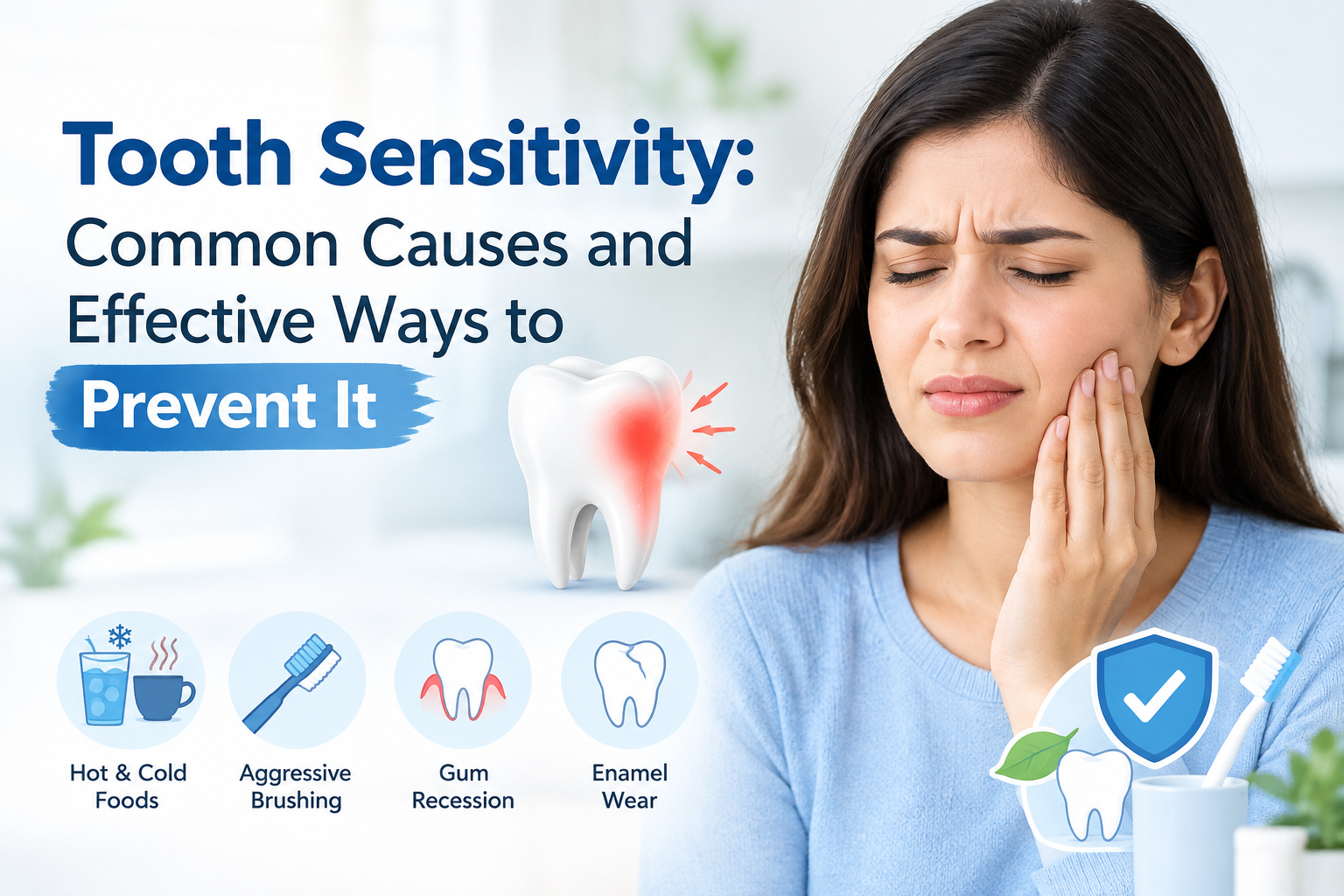
Tooth sensitivity, also called dentin hypersensitivity, occurs when the inner layers of a tooth become more exposed to external triggers.
Healthy enamel and gum tissue normally protect the sensitive inner parts of your teeth. When enamel becomes worn or gums recede, the underlying dentin can become exposed.
This can cause a short, sharp sensation when your teeth come into contact with:
Tooth enamel can gradually wear down due to aggressive brushing, acidic foods and drinks, or other factors. As enamel becomes thinner, the underlying dentin may become more exposed.
Using a soft-bristled toothbrush and gentle brushing technique can help protect your enamel.
When gums move away from the tooth surface, the roots of the teeth can become exposed. Unlike the crown of the tooth, the root does not have the same protective enamel layer.
Exposed roots can therefore be more sensitive to temperature and touch.
A cavity can sometimes cause sensitivity, particularly when eating sweet, hot, or cold foods.
If sensitivity is limited to one particular tooth or is becoming more noticeable, a dental examination can help identify whether tooth decay is involved.
A cracked tooth may cause sensitivity or pain, especially when chewing or consuming hot and cold foods.
Because cracks can sometimes be difficult to see, persistent sensitivity in one tooth should be evaluated by a dentist.
Grinding or clenching your teeth can gradually wear down enamel and increase the risk of sensitivity.
If you frequently wake up with jaw discomfort, headaches, or sensitive teeth, discuss these symptoms with your dentist.
Frequent consumption of acidic foods and beverages can contribute to enamel erosion.
Common examples include:
Reducing frequent exposure to acidic products can help protect your enamel.
Some people experience temporary sensitivity after procedures such as professional teeth cleaning, fillings, whitening, or other dental treatments.
If sensitivity continues or becomes severe, contact your dental professional for advice.
The right prevention strategy depends on the underlying cause, but several daily habits can help protect your teeth.
A hard-bristled toothbrush combined with excessive pressure can contribute to enamel wear and gum irritation.
Brush gently using a soft-bristled toothbrush.
Fluoride toothpaste helps strengthen tooth enamel and protect against cavities. If you regularly experience sensitivity, your dentist may also recommend a toothpaste specifically formulated for sensitive teeth.
Brushing harder does not necessarily mean brushing better. Gentle, thorough brushing is preferable to aggressive scrubbing.
Try to reduce frequent exposure to acidic beverages and foods. If you consume an acidic drink, rinsing your mouth with water afterward can help.
Avoid brushing immediately after consuming highly acidic foods or drinks, as enamel may temporarily be softened by acid exposure.
Brush twice a day and clean between your teeth daily. Keeping plaque under control helps reduce the risk of cavities and gum disease, both of which can contribute to sensitivity.
If teeth grinding is contributing to enamel wear, your dentist may recommend a suitable mouthguard to protect your teeth.
Not all tooth sensitivity is serious, but persistent or worsening symptoms should not be ignored.
Schedule a dental examination if:
A dentist can determine the underlying cause and recommend appropriate treatment.
Treatment depends on why the sensitivity is occurring.
Depending on your condition, your dentist may recommend:
The goal is to address the underlying problem rather than simply mask the symptoms.
Some simple habits can help reduce sensitivity, such as using a soft toothbrush, brushing gently, using fluoride toothpaste, and reducing frequent acidic food and drink consumption.
However, home care cannot treat problems such as deep cavities, cracked teeth, or significant gum disease.
If sensitivity is persistent, professional diagnosis is important.
At Kiran Smile Dental Clinic, we understand that tooth sensitivity can affect everyday activities such as eating, drinking, and brushing.
Our dental team evaluates the possible cause of sensitivity before recommending treatment. Whether the issue is related to cavities, gum recession, enamel wear, tooth damage, or another dental condition, personalized care can help address the problem effectively.
Regular dental examinations and professional preventive care can also help identify potential problems before they become more complicated.
Tooth sensitivity can have several causes, including enamel wear, gum recession, cavities, cracked teeth, teeth grinding, and frequent exposure to acidic foods and drinks.
The good news is that many causes of sensitivity can be prevented or managed with proper oral hygiene and professional dental care.
If your teeth regularly hurt when you eat or drink something hot, cold, sweet, or acidic, don't simply ignore the discomfort. Book a dental check-up at Kiran Smile Dental Clinic to understand the cause and find the right solution for your smile.